
Hydration & Habits
Quiet Hydration: Documenting Eight Weeks of Daily Water Intake
Alistair Pembroke
·
·
8 min read
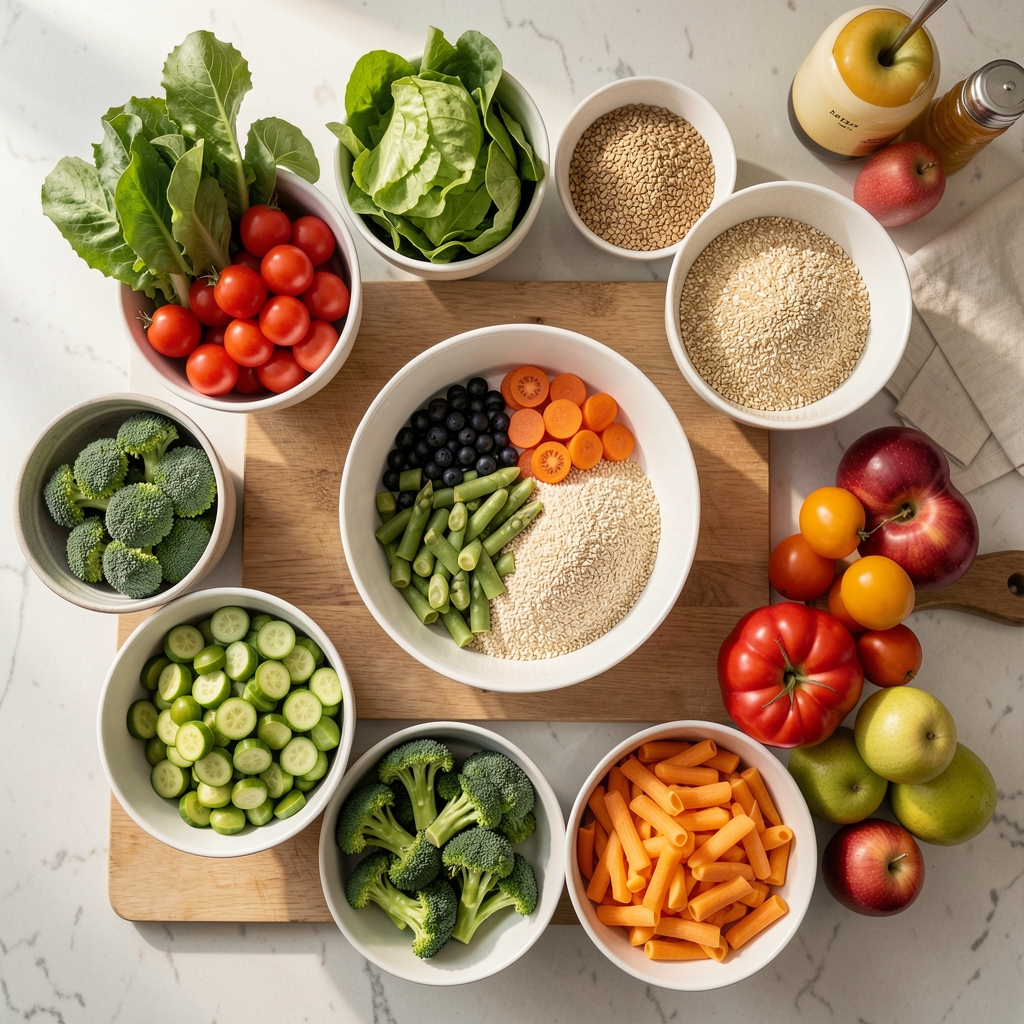
Across five consecutive weekdays in early February, the Davenolt Gazette editorial team prepared and photographed every meal at home — logging ingredient weights, seasonal sourcing, and the practical geometry of a plate that holds its balance under ordinary time pressure.
A balanced plate is not primarily a visual arrangement. It is a set of proportional decisions made before any cooking begins: how much of the available surface will be given to leafy vegetables, how much to a complex carbohydrate, and how much to a protein source. These proportions have been studied extensively in published dietary research, and while the specific ratios shift with different nutritional frameworks, the structural principle remains stable — diversity of ingredient, distribution of macronutrient, and attention to fibre content.
During the five-day observation, the team worked without rigid targets. Each meal was assembled from what the local market and a mid-week grocery delivery provided. The focus was on recording what happened naturally — which ingredients recurred, which combinations felt complete, and where the gaps became apparent by the third day.
The results were less dramatic than many published accounts of nutritional audits suggest. A household that buys seasonally, cooks from scratch most evenings, and maintains a basic food journal tends to land close to conventional dietary guidelines without deliberate optimisation. The observation confirmed what the literature already notes: the primary variable is not knowledge of nutrition but consistency of practice.
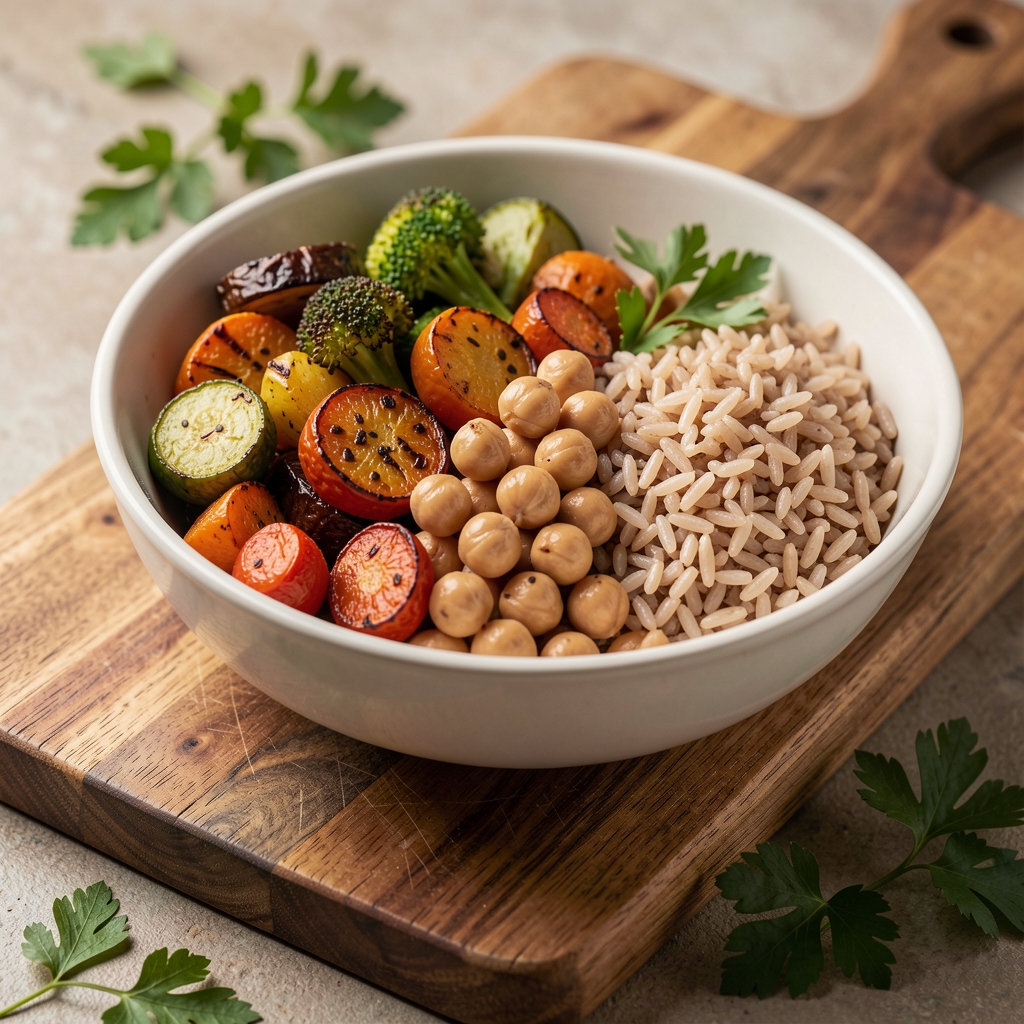
London, February 2026 — Day Two meal, documented
February in London offers a narrower palette than June. Root vegetables dominate: parsnips, swede, celeriac, dark-leafed kale, and leeks. The absence of tomatoes and courgettes — staple summer additions to a salad or grain bowl — changes the flavour profile considerably and requires a different structural approach to the plate.
Root vegetables, roasted, bring natural sweetness and a density that lighter summer produce does not. Paired with a legume base — chickpeas appeared three times across the five days — they create a high-fibre foundation that sustains energy balance across the afternoon. The editorial team noted that winter eating, when done with seasonal intention, tends toward deeper flavours and more considered combinations, even when the range of ingredients appears more limited.
Kale remained the primary leafy green throughout the week. Lightly dressed, wilted in the residual heat of roasted vegetables, or added raw to a grain bowl, it contributed meaningfully to the daily fibre-rich diet target without requiring separate preparation. Its bitterness, when balanced by a small quantity of lemon juice or apple cider vinegar, became a counterpoint to the sweetness of roasted root vegetables rather than a challenge to manage.
"The primary variable is not knowledge of nutrition but consistency of practice — and consistency, it turns out, is mostly a question of kitchen organisation."
Published dietary guidelines from the British Nutrition Foundation recommend that adults consume approximately 30g of dietary fibre daily. The observation week produced an average of 27g per day across the team members who tracked their intake — a modest shortfall that was most visible on the day a grain bowl was replaced by a pasta dish made with refined flour. That substitution reduced the fibre contribution by roughly 8g at a single meal.
Protein distribution across the day proved more balanced than expected. Eggs at breakfast, legumes at lunch, and a modest serving of fish or tofu at dinner created a relatively even spread without conscious effort. The literature on protein timing for general wellness — as distinct from sports performance contexts — suggests that even distribution across three meals may support satiety more effectively than a single large protein serving in the evening.
What the observation did not resolve was the question of calorie awareness in practice. The team recorded approximate quantities but did not weigh ingredients precisely. This is characteristic of how most households operate, and the resulting nutritional profile — while coherent — contained genuine uncertainty. A food journal kept over thirty days, with approximate portion records, builds a useful aggregate picture without demanding the precision of a laboratory setting.
The editorial team's working definition of a whole food, for the purposes of this observation, was simple: an ingredient that arrives in its recognisable natural form and undergoes only basic preparation — washing, chopping, cooking — before consumption. By this definition, the five-day log showed that approximately 80% of ingredients used qualified as whole foods.
The 20% that did not included bread (purchased sliced, from a bakery), a jar of tahini, tinned tomatoes on day four, and an oat-based granola used for two breakfasts. None of these are nutritionally problematic inclusions. The distinction matters not because processed ingredients are harmful by definition, but because tracking the ratio helps sustain mindful eating habits — the awareness of what the plate is made from and how it was made.
One recurring practical observation: whole grains require longer cooking times than refined alternatives. Brown rice, pearl barley, and whole spelt all need 25-45 minutes of active cooking or soaking. Households that prepare these in bulk at the start of the week remove that time barrier from Tuesday onwards. The food journal entries for days two through five consistently noted that pre-cooked grains were the single most effective ingredient in enabling quick assembly of a balanced meal on a weekday evening.
Portion awareness does not require a set of kitchen scales at every meal. It requires, more practically, an established sense of what a serving of cooked grains looks like in the bowl you use every day, and an honest accounting of whether a second helping is driven by hunger or by proximity. The observation week noted both: on day three, a generous serving of roasted parsnips was taken because the tray was on the counter, not because hunger genuinely called for it.
A sustainable weight approach, as distinct from a rapid dietary intervention, centres on this kind of attentive observation rather than caloric restriction. Published research consistently indicates that gradual, observation-based adjustments to portion size — made over weeks rather than days — tend to produce more durable changes in eating patterns than structured restrictive regimes. The food journal is the tool that makes the observation possible.
By the end of the fifth day, the team's primary finding was a simple one: the infrastructure of a balanced plate — diverse seasonal produce, a whole-grain base, a reliable protein source, and a small quantity of healthy fat — is not difficult to assemble. The difficulty lies in maintaining the kitchen routines that make assembly easy on a Wednesday evening when time is short. The food journal, kept honestly, is both the measurement tool and the accountability structure that sustains those routines.
London, February 2026 — Field observation, archived 10 February. Sources: British Nutrition Foundation dietary guidelines; published nutritional research on fibre intake and energy balance.

Eleanor Whitfield is a London-based editorial writer with a background in nutritional science communication. She contributes regularly to Davenolt Gazette on topics including seasonal cooking, whole-food meal construction, and the practical application of published dietary research.
More from Eleanor →