Nutrition & Balance
The Architecture of a Balanced Plate: Notes from a Week of Seasonal Eating
Eleanor Whitfield
·
For eight weeks beginning in early January, Alistair Pembroke tracked daily fluid intake in a standard London working-week context — recording not volumes alone, but the circumstances of each drinking occasion, the relationship between hydration timing and appetite, and the patterns that emerged without deliberate intervention.
Most food journals track meals. Few track fluids. The oversight is understandable — drinking water has none of the deliberate quality of assembling a plate of food. It happens in passing, at a desk, between tasks, or because a glass happened to be nearby. This incidental character makes it difficult to recall and therefore difficult to document.
The consequence is that hydration sits outside the editorial conversation about daily nutrition despite being among the most basic variables in everyday energy balance and appetite regulation. Published nutritional research notes consistently that mild under-hydration is frequently mistaken for hunger — a confusion that influences snack frequency and portion size in ways that are rarely visible without a record.
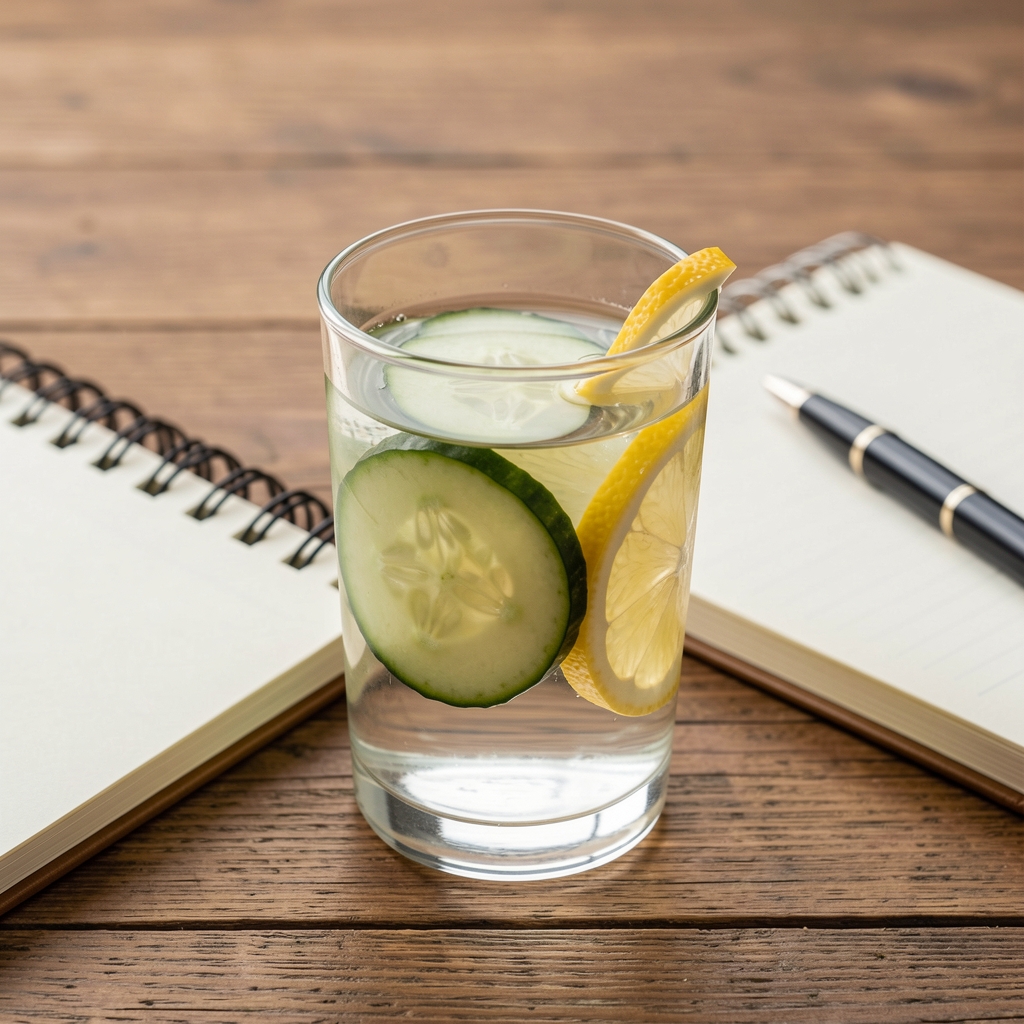
The eight-week observation was initiated precisely to make this invisible variable visible. The methodology was simple: a 750ml reusable bottle, refilled and counted throughout the day, with a note of any additional tea, coffee, or juice consumed. No targets were set initially. The first two weeks were purely observational — recording what happened without adjustment.
The baseline record produced an average of 1.4 litres of water per day on working days — below the 2-litre general guideline commonly cited by nutrition resources. The shortfall was consistent and predictable: it occurred primarily between 14:00 and 18:00, when desk work was most concentrated and a water bottle left at the opposite end of the workspace was not refilled.
Two observations were notable during this baseline period. First, on days when morning coffee was the first fluid consumed before 08:30, total daily water intake was lower on average than on days when water preceded coffee. The mechanism suggested in the literature — that coffee's mild diuretic effect, when not offset by prior water intake, creates a small early deficit that compounds through the day — appeared to hold in practice, though the observation is self-reported and not controlled.
Second, on the two days per week when an active lifestyle routine was maintained — a 45-minute walk and a light evening session at a community gym — fluid intake rose without deliberate attention, to approximately 2.1 litres. Physical activity, in other words, was a more reliable prompt for hydration than any information about the importance of drinking water.

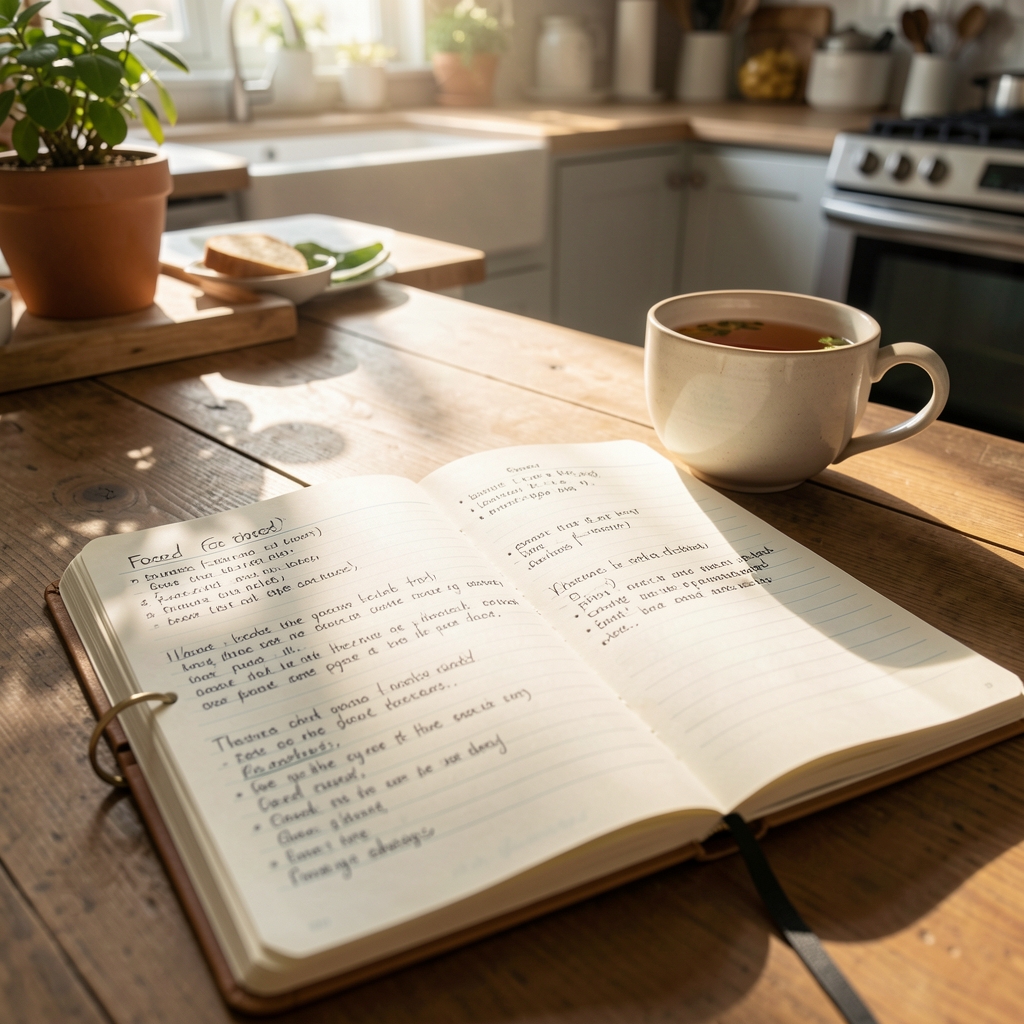
London, January 2026 — Week Three, morning preparation documented
Beginning in week three, two structural changes were introduced. The water bottle was kept on the desk at all times rather than on a kitchen counter. A second 500ml glass was placed beside the morning coffee equipment so that water was consumed before the first cup of coffee each day. No other changes were made to diet, activity level, or daily routine.
The effect was measurable within ten days. Average daily intake increased to 2.0 litres on working days. The afternoon deficit that characterised the baseline record largely disappeared. Subjectively, the occurrence of what had previously been logged as mid-afternoon hunger — prompting an unscheduled snack at approximately 15:30 — reduced from five occasions per week in the baseline to two occasions per week by week five.
This observation is consistent with the published literature on appetite and hydration. The confusion between thirst and hunger is well-documented in nutritional science contexts, and the practical consequence — additional calorie consumption driven by a fluid deficit rather than genuine hunger — is one of the quieter contributors to calorie awareness challenges that does not feature prominently in mainstream dietary guidance.
"Physical activity was a more reliable prompt for hydration than any amount of information about the importance of drinking water."
One of the more unexpected observations across the eight-week record concerned the relationship between water intake and mealtime composition. On days when hydration was consistently maintained above 1.8 litres before dinner, the evening meal tended to be smaller in volume. On days when afternoon intake had been low, dinner portions were consistently larger — independently of what was being prepared or how hungry the observer had felt at midday.
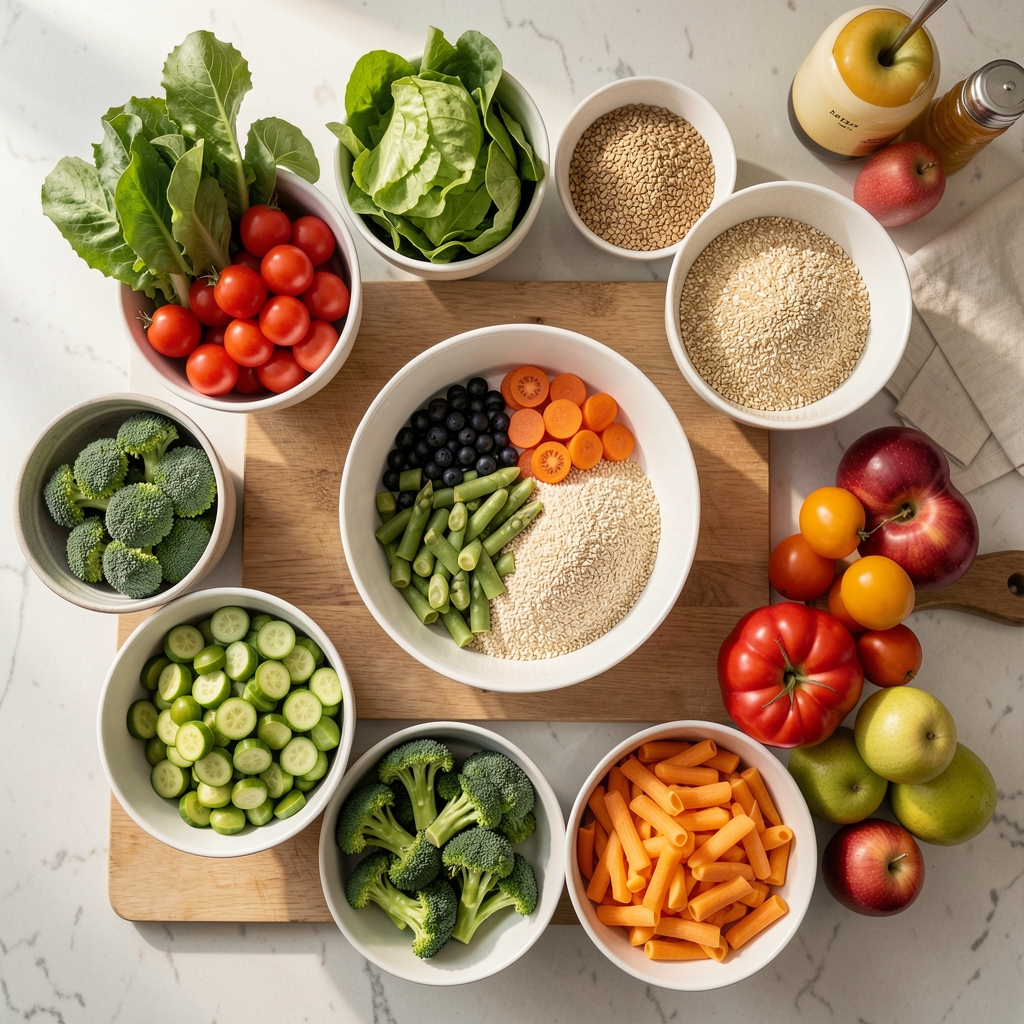
This pattern held across different meal types: grain bowls, soup and bread, fish with vegetables, pasta with legumes. The common factor was not the food itself but the preceding hydration record for that day. A working hypothesis — consistent with the literature on gastric volume and satiety signalling — is that a well-hydrated digestive system reaches satiety more readily during a meal than a mildly dehydrated one.
The implication for portion awareness and a sustainable weight approach is worth noting. Adjusting hydration habits is a lower-friction change than adjusting dietary composition. The structural changes documented in this observation — one bottle on the desk, one glass of water before coffee — required no additional grocery purchases, no new cooking skills, and approximately three minutes of additional daily attention. The effects on appetite and portion behaviour, while self-reported and not formally controlled, were among the most consistent changes recorded across the entire eight-week period.
The observation ran through late February and into early March, during which London temperatures began to rise modestly from midwinter levels. Even this slight seasonal shift — an average temperature increase of approximately 4°C between week six and week eight — produced a visible change in spontaneous hydration behaviour. Unprompted water drinking increased, and the structural supports introduced in week three became less necessary: the bottle was reached for without the passive reminder of its desk-based location.
This seasonal note matters for a nutrition editorial. The guidance to consume 2 litres of water daily is often presented as a static target, identical year-round. The eight-week record suggests that the practical challenge of meeting that target varies considerably by season and by activity level, and that hydration guidance would be better framed around structural environments — the placement of a bottle, the sequencing of morning fluids — than around daily volume targets alone.
The observation closes with an unremarkable conclusion that is, in practice, useful: consistent daily water intake of approximately 2 litres is achievable without willpower if the environment is arranged to make it the path of least resistance. The food journal entries that began as a record of fluid volumes gradually became a record of how physical surroundings, not personal discipline, determine most routine health behaviours.
London, March 2026 — Field observation, archived 4 March. Sources: published nutritional research on hydration and satiety; British Nutrition Foundation guidance on daily fluid intake.

Alistair Pembroke writes on everyday nutrition habits, active lifestyle practices, and the intersection of sport and daily food routine for Davenolt Gazette. He contributes field observations from London with a focus on practical, evidence-informed wellness habits.
More from Davenolt Gazette →